

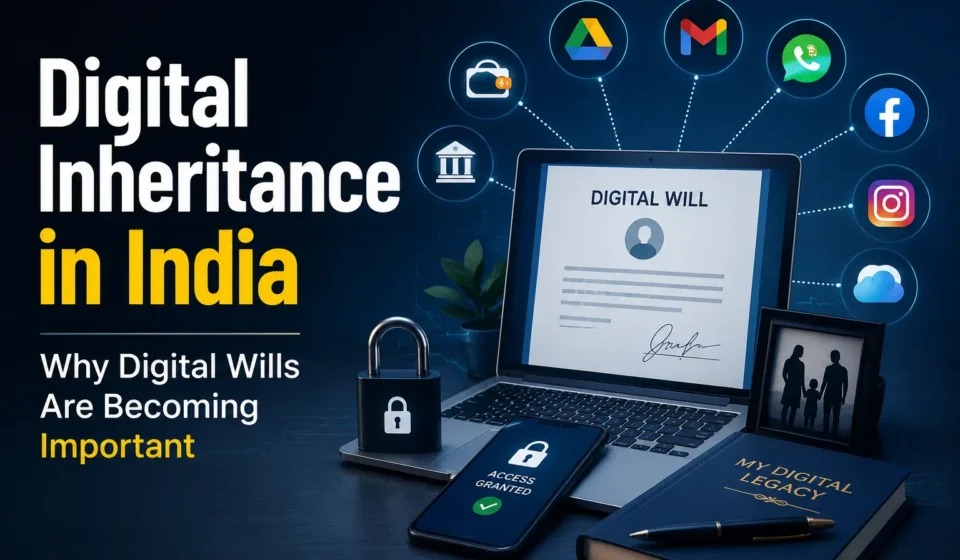

In today’s digital world, people own far more than physical assets. From social media profiles and email accounts to cloud storage, cryptocurrencies, and online subscriptions, a large part of modern life now exists online.
But what happens to these digital assets after someone dies?
This question has sparked growing discussions around digital inheritance and the importance of creating digital wills. As more Indians build extensive digital lives, legal experts and policymakers are increasingly examining how digital assets should be managed and passed on to heirs.
What Is Digital Inheritance?
Digital inheritance refers to the transfer or management of a person’s digital assets after their death.
These assets may include:
- Social media accounts
- Email accounts
- Cloud storage files
- Digital photos and videos
- Online banking information
- Cryptocurrencies
- Digital subscriptions
- Websites and blogs
- Domain names
- Online business accounts
Unlike physical property, digital assets often exist on platforms owned by private companies, making inheritance more complicated.
Why Digital Assets Matter
For many people, digital assets hold significant personal, financial, and sentimental value.
Consider the amount of information stored across:
- Gmail
- Google Drive
- Apple iCloud
- Online investment platforms
Families may need access to important records, photographs, financial information, or business accounts after a loved one passes away.
Without proper planning, accessing these assets can become difficult.
The Legal Challenge in India
India currently does not have a comprehensive legal framework specifically governing digital inheritance.
As a result, families often face uncertainty when attempting to access a deceased person’s digital accounts.
Challenges may include:
- Privacy protections
- Platform-specific policies
- Account ownership disputes
- Access restrictions
- Data protection concerns
Each technology company may have different rules regarding what happens to user accounts after death.
This creates a complex legal and practical situation for heirs.
What Is a Digital Will?
A digital will is a document that outlines how a person’s digital assets should be managed after their death.
It can include instructions regarding:
- Social media accounts
- Email access
- Digital documents
- Online investments
- Cryptocurrency wallets
- Cloud storage accounts
A digital will may also designate a trusted individual responsible for managing digital assets and carrying out the owner’s wishes.
Why Digital Wills Are Becoming More Important
The average person now maintains dozens of online accounts throughout their lifetime.
Many of these accounts contain valuable information that families may need to access later.
Digital wills can help:
- Reduce confusion for heirs
- Protect important digital records
- Preserve family memories
- Simplify account management
- Clarify ownership intentions
- Prevent disputes among beneficiaries
As digital assets continue growing in importance, planning for their future becomes increasingly necessary.
The Rise of Digital Estate Planning
Around the world, legal systems are beginning to address the challenges of digital inheritance.
Several countries have introduced frameworks that allow heirs to request access to certain digital assets under specific conditions.
Technology companies have also started offering tools that help users prepare for account management after death.
Examples include:
- Legacy contact options
- Inactive account managers
- Memorialized profiles
- Account transfer requests
These tools are becoming an important part of modern estate planning.
What Experts Recommend
Legal and technology experts increasingly encourage individuals to:
- Maintain a list of digital assets
- Document account information securely
- Create a digital will
- Designate trusted digital representatives
- Review platform-specific policies
Planning ahead can make it easier for family members to handle digital affairs during difficult times.
Balancing Privacy and Inheritance
One of the biggest challenges surrounding digital inheritance is balancing privacy rights with the interests of legal heirs.
Important questions include:
- Should family members access private messages?
- Who owns digital content after death?
- How should personal data be protected?
- What rights do platform providers have?
As digital lives become more extensive, these issues are likely to play a larger role in future legal discussions.
The Future of Digital Inheritance in India
As technology continues to evolve, digital inheritance is expected to become an increasingly important legal and social issue.
Growing awareness around digital assets may eventually lead to clearer guidelines and legal frameworks for managing online accounts and digital property after death.
Until then, experts believe individuals should take proactive steps to organize their digital assets and communicate their wishes through proper estate planning.
Conclusion
Digital assets have become an essential part of modern life, yet many people overlook what happens to them after death. As India continues its digital transformation, the importance of digital wills and digital estate planning is becoming increasingly clear.
Whether it is social media accounts, cloud storage, cryptocurrency holdings, or personal digital records, planning for digital inheritance can help protect both assets and memories for future generations.