

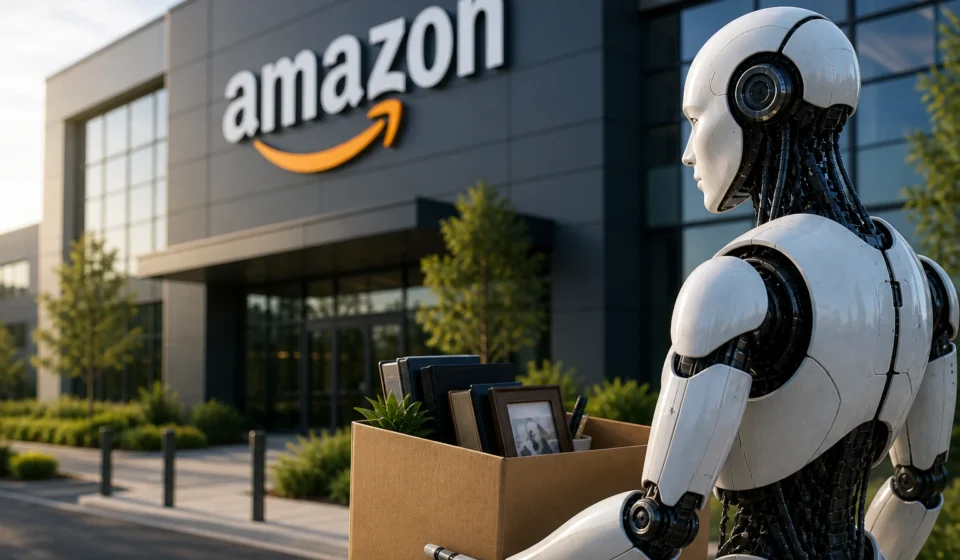

Recent layoffs at Amazon have sparked widespread debate about the role of artificial intelligence in the workforce. With thousands of jobs affected globally, many are asking whether AI is replacing human workers.
While AI is part of the story, the reality is more complex.
So, what is really behind Amazon’s layoffs, and how much of it is driven by AI?
Amazon Layoffs: What Happened
Amazon has reportedly laid off around 16,000 employees globally as part of a major restructuring effort in 2026.
Key Highlights:
- 16,000 jobs cut worldwide
- Affected multiple departments
- Focus on efficiency and cost optimization
This marks one of the largest layoffs in Amazon’s recent history
The Real Reasons Behind the Layoffs
The layoffs are not caused by a single factor.
1. Cost-Cutting Measures
After rapid expansion during the pandemic, Amazon is now:
- Reducing operational costs
- Eliminating redundant roles
- Improving efficiency
2. Business Restructuring
Amazon is reorganizing teams and priorities.
This includes:
- Merging departments
- Closing less profitable divisions
- Refocusing on core areas
3. Growing Role of AI and Automation
AI is playing an increasing role in Amazon’s operations.
Where AI is used:
- Logistics optimization
- Customer service automation
- Data analysis and forecasting
These systems reduce the need for some manual and repetitive roles.
Is AI Replacing Jobs at Amazon?
The answer is partially yes, but not entirely.
✔ AI is replacing:
- Routine and repetitive tasks
- Certain operational roles
✔ But AI is also creating:
- New technical roles
- AI development and maintenance jobs
- Data and engineering positions
The workforce is shifting, not just shrinking
Why This Raises Concerns
The layoffs highlight broader concerns about AI and employment.
Key Issues:
- Job displacement in traditional roles
- Skills gap for new AI-related jobs
- Uncertainty about future employment
Many workers worry about long-term job security.
A Broader Industry Trend
Amazon is not alone.
Other tech companies are also:
- Adopting AI
- Automating processes
- Restructuring teams
This reflects a global shift toward AI-driven operations
What This Means for the Future of Work
The impact of AI on jobs will continue to grow.
Future Trends:
- More automation of routine tasks
- Increased demand for tech skills
- Need for reskilling and upskilling
Workers will need to adapt to changing job requirements.
AI: Threat or Opportunity?
AI presents both challenges and opportunities.
Risks:
- Job losses in certain sectors
- Increased competition for skilled roles
Opportunities:
- New career paths
- Higher productivity
- Innovation across industries
Conclusion
Amazon’s layoffs are driven by multiple factors, including cost-cutting, restructuring, and the growing role of AI. While AI is influencing workforce changes, it is not the sole reason behind job cuts.
The situation reflects a larger transformation in how companies operate in the age of artificial intelligence. Understanding this shift is essential for both businesses and workers moving forward.