

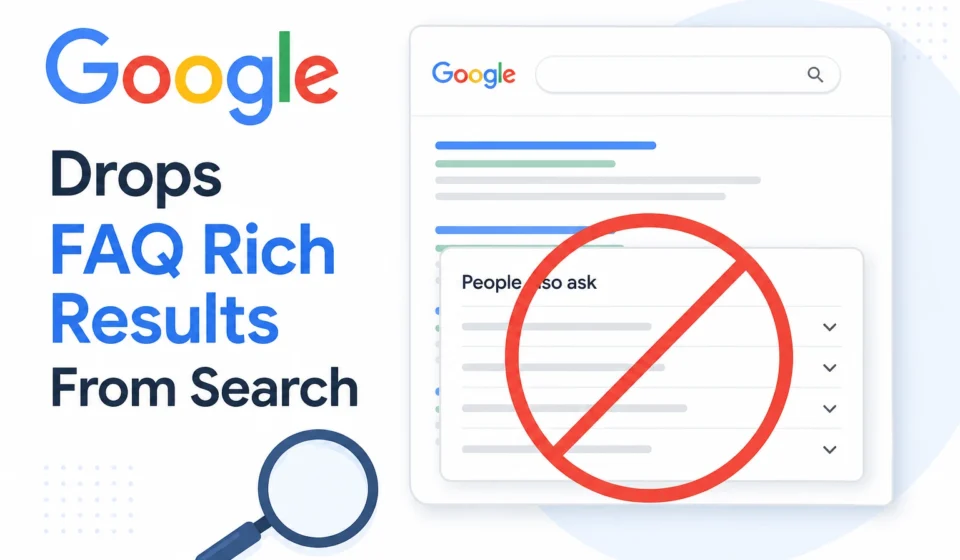

Google Search is making another major change to search results by dropping FAQ rich results for most websites.
According to reports, FAQ rich results officially stopped appearing in Google Search on May 7, 2026, marking a significant shift in how structured data is displayed in search results.
The update could significantly impact:
- Bloggers
- SEO professionals
- Publishers
- Affiliate websites
For years, FAQ schema markup helped websites gain extra visibility in search results through expandable question-and-answer sections.
Now, Google is reducing or removing those rich results from standard search listings.
So, what exactly changed — and what does it mean for SEO?
What Are FAQ Rich Results?
FAQ rich results are enhanced search listings that display frequently asked questions directly in Google Search.
They usually appear below a search result and allow users to expand questions without visiting the page immediately.
Website owners used FAQ schema to:
- Increase SERP visibility
- Improve click-through rates (CTR)
- Occupy more search space
- Provide quick answers to users
FAQ rich results became extremely popular in SEO strategies over the past few years.
What Changed?
Google is reportedly removing FAQ rich results for most websites in regular search results.
According to the update:
- FAQ rich snippets will no longer appear widely across Search
- Only highly authoritative government and health websites may continue receiving FAQ rich results regularly
This marks a major shift in how structured data appears in Google Search.
Why Is Google Dropping FAQ Rich Results?
Google has not fully eliminated FAQ schema itself, but it appears to be reducing its visibility because of widespread abuse and low-quality implementations.
Possible reasons include:
- Overuse of FAQ schema
- AI-generated spam content
- Repetitive or low-value FAQs
- SERP clutter reduction
Many websites added FAQ sections primarily for SEO advantages rather than improving user experience.
Google may now be trying to clean up search results and prioritize higher-quality content.
How This Impacts SEO
This change could affect many SEO strategies.
Websites may lose:
- Extra search visibility
- Larger SERP footprint
- Higher click-through rates
- Additional search engagement
Sites heavily relying on FAQ snippets may notice reduced visibility in organic search results.
Does FAQ Schema Still Matter?
Yes — but differently than before.
FAQ schema may still help:
- Search engines understand page content
- Organize structured information
- Improve accessibility for certain systems
However, simply adding FAQ markup no longer guarantees rich results in Google Search.
What Website Owners Should Focus on Instead
As Google reduces FAQ rich snippets, SEO strategies may need to shift toward:
- High-quality content
- Helpful user experiences
- Strong topical authority
- Clear page structure
Instead of focusing heavily on rich snippets, websites may benefit more from:
- Original reporting
- Expert insights
- Better content depth
- E-E-A-T signals
The Bigger Trend in Google Search
This update reflects a larger shift happening in search engines.
Google is increasingly:
- Reducing cluttered SERPs
- Fighting AI-generated spam
- Prioritizing trustworthy content
- Improving search quality
The search landscape is becoming more competitive, especially as AI-generated content grows rapidly online.
What This Means for the Future of SEO
The removal of FAQ rich results shows that SEO tactics can change quickly.
Strategies that worked for years may become less effective as Google evolves its algorithms and search experience.
Moving forward, websites may need to focus more on:
- Authority
- Trustworthiness
- Unique value
- User satisfaction
instead of relying heavily on SERP features alone.
Conclusion
Google dropping FAQ rich results marks another major shift in modern SEO. While FAQ schema itself may still have technical value, websites can no longer rely on FAQ rich snippets as a guaranteed visibility strategy.
As Google continues refining Search, the focus is increasingly moving toward high-quality, trustworthy, and genuinely helpful content.