

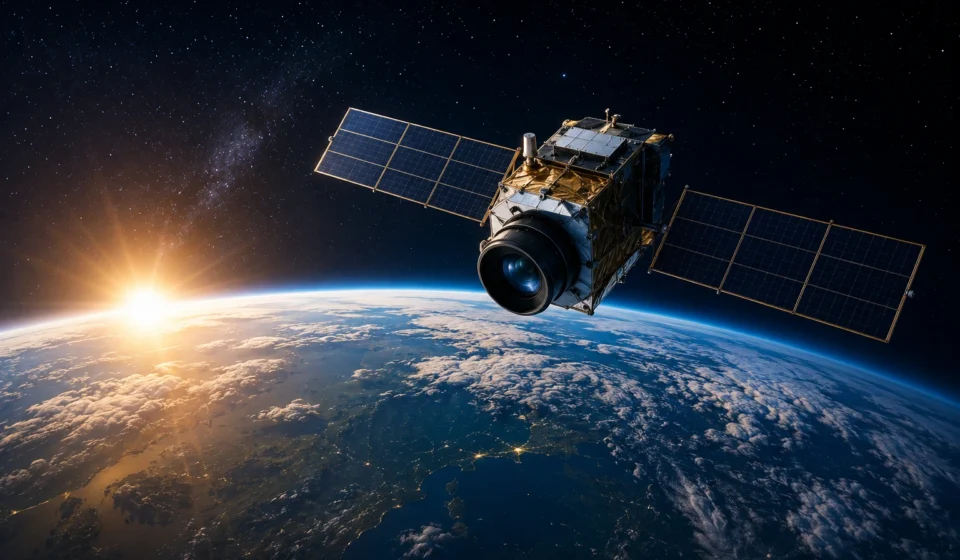

Bengaluru-based space startup GalaxEye has achieved a major milestone by successfully launching its first satellite, attracting attention across India’s growing space-tech industry.
The launch represents an important step forward for:
- Indian private space companies
- Earth observation technology
- AI-powered satellite imaging
The mission has also received praise from Indian space and government leaders, highlighting the rapid growth of India’s startup-driven space ecosystem.
What Is GalaxEye?
GalaxEye is an Indian space-tech startup focused on advanced Earth observation technologies.
The company is developing next-generation satellite systems capable of delivering:
- High-resolution imaging
- All-weather monitoring
- AI-powered data analysis
Its goal is to improve how satellite data is collected and used across industries.
GalaxEye Successfully Launches Its First Satellite
On May 3, 2026, Bengaluru-based startup GalaxEye successfully launched its first satellite, Drishti, aboard a SpaceX Falcon 9 rocket from California.
The launch marked a major milestone for India’s growing private space-tech ecosystem.
Drishti is being described as the world’s first OptoSAR satellite, combining:
- Optical imaging
- Synthetic Aperture Radar (SAR) technology
into a single Earth observation platform.
This advanced system allows the satellite to capture images:
- During cloudy weather
- At night
- In difficult environmental conditions
where traditional optical satellites often struggle.
Why This Satellite Matters
Traditional satellite imaging often struggles in poor weather or low-light environments.
GalaxEye’s technology aims to solve this problem by combining multiple imaging systems into one platform.
This could improve:
- Disaster monitoring
- Agriculture analysis
- Border surveillance
- Environmental tracking
- Urban planning
The technology may also help provide more reliable real-time Earth observation data.
How AI Is Connected to the Mission
Modern satellite systems increasingly rely on AI for:
- Image processing
- Pattern recognition
- Data analysis
- Real-time monitoring
AI can help satellites process massive amounts of Earth observation data much faster than traditional systems.
This makes satellite intelligence more efficient and scalable.
India’s Growing Space Startup Ecosystem
India’s private space sector has expanded rapidly in recent years.
The success of startups like GalaxEye reflects:
- Increased investment in space technology
- Government support for private innovation
- Growing global demand for satellite data
Indian startups are now entering areas traditionally dominated by large government agencies and global aerospace companies.
Why Space-Tech Startups Are Important
Space technology is becoming increasingly valuable for:
- National security
- Climate monitoring
- Communication systems
- Smart agriculture
- Logistics and mapping
Private startups are helping accelerate innovation by building specialized and cost-effective solutions.
Global Interest in Earth Observation Technology
Earth observation is becoming a major global industry.
Governments and companies use satellite data for:
- Weather prediction
- Infrastructure planning
- Resource management
- Security operations
Advanced imaging technologies like OptoSAR could make satellite intelligence more accurate and reliable.
What This Means for the Future
GalaxEye’s successful satellite launch highlights the growing role of Indian startups in global space innovation.
As AI, satellite imaging, and Earth observation technologies continue advancing, private space companies could become increasingly important in solving real-world problems.
The mission also signals that India’s startup ecosystem is expanding far beyond software and into deep-tech innovation.
Conclusion
GalaxEye’s first satellite launch marks a major achievement for India’s private space industry. By combining advanced imaging systems with AI-powered analysis, the Bengaluru startup is positioning itself as an important player in the future of Earth observation technology.
As India’s space-tech ecosystem continues growing, missions like this could help drive the next wave of innovation in satellite intelligence and global monitoring systems.