


Artificial intelligence is entering a new phase in India—one where it doesn’t just answer questions but takes action on behalf of users.
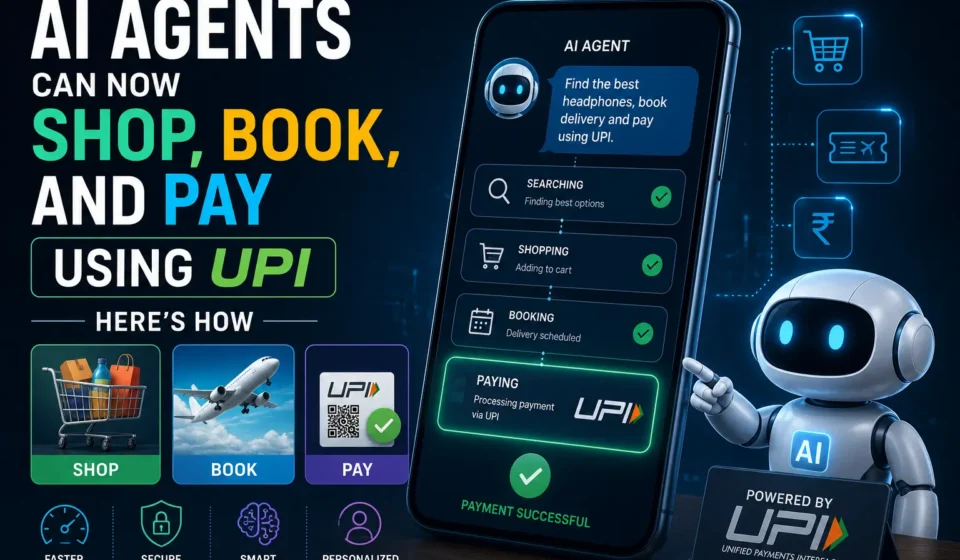
AI agents can now shop online, book services, and even complete payments using UPI autonomously. The development represents a major leap from traditional chatbots, transforming AI from a digital assistant into an intelligent task executor.
As agentic AI gains momentum, everyday activities like buying groceries, booking tickets, or paying bills could soon happen through a simple conversation.
What Are AI Agents?
Unlike conventional AI assistants that provide information, AI agents are designed to perform actions.
They can:
- understand user instructions,
- make decisions,
- interact with apps and websites,
- complete multi-step tasks,
- and achieve specific goals independently.
For example, instead of asking how to book a flight, users can simply instruct:
“Book me the cheapest flight to Mumbai next Friday.”
The AI agent handles the process from start to finish.
How Autonomous UPI Payments Work
The integration of UPI allows AI agents to complete transactions without requiring users to manually navigate payment screens.
A typical process works like this:
1. User Gives an Instruction
The user provides a natural language command, such as:
- Order groceries for the week.
- Book movie tickets for tonight.
- Pay my electricity bill.
2. The AI Finds Options
The agent searches across platforms to identify suitable choices based on price, availability, and user preferences.
3. It Makes a Recommendation
The AI selects the most relevant option or presents alternatives.
4. Payment Is Initiated
Using pre-approved permissions and payment frameworks, the agent initiates a UPI transaction.
5. The Task Is Completed
Once authorized, the payment is processed and the booking or purchase is confirmed.
Why This Is a Big Deal
For years, AI has primarily functioned as an information tool.
This development shifts AI toward becoming an action-oriented assistant capable of executing real-world tasks.
The change could significantly alter how consumers interact with digital services.
Instead of opening multiple apps and completing forms, users may simply describe what they want.
Potential Use Cases
AI agents could soon help users:
- order food,
- book flights and hotels,
- pay utility bills,
- reserve restaurant tables,
- purchase event tickets,
- manage subscriptions,
- recharge mobile plans,
- and complete everyday shopping tasks.
This could make digital transactions faster and more convenient.
Benefits of Agentic Payments
Convenience
Users save time by automating repetitive tasks.
Personalization
AI agents can learn preferences and tailor recommendations.
Faster Transactions
Tasks that previously required multiple steps can be completed in seconds.
Seamless Experiences
Searching, booking, and paying become part of one continuous interaction.
What About Security?
The rise of autonomous payments also raises important concerns.
Questions include:
- How much control should users give AI agents?
- What safeguards prevent unauthorized spending?
- How are payment permissions managed?
- What happens if the AI makes an error?
Most implementations include protections such as:
- spending limits,
- approval thresholds,
- authentication requirements,
- transaction logs,
- and user-defined permissions.
These measures aim to ensure that convenience does not come at the expense of security.
The Future of AI Commerce
The emergence of AI agents capable of making payments signals the beginning of a new era in digital commerce.
Experts believe future AI assistants may evolve into personal digital representatives capable of handling many aspects of everyday life.
As UPI continues to transform India’s payments ecosystem, combining it with agentic AI could redefine how consumers shop and transact online.
Conclusion
AI agents that can shop, book, and pay using UPI represent one of the biggest shifts in consumer technology in recent years. Moving beyond conversation and into action, these systems have the potential to simplify daily tasks and reshape digital experiences across India.
While questions around security and regulation remain, one thing is clear: the future of AI isn’t just about answering questions—it’s about getting things done.