

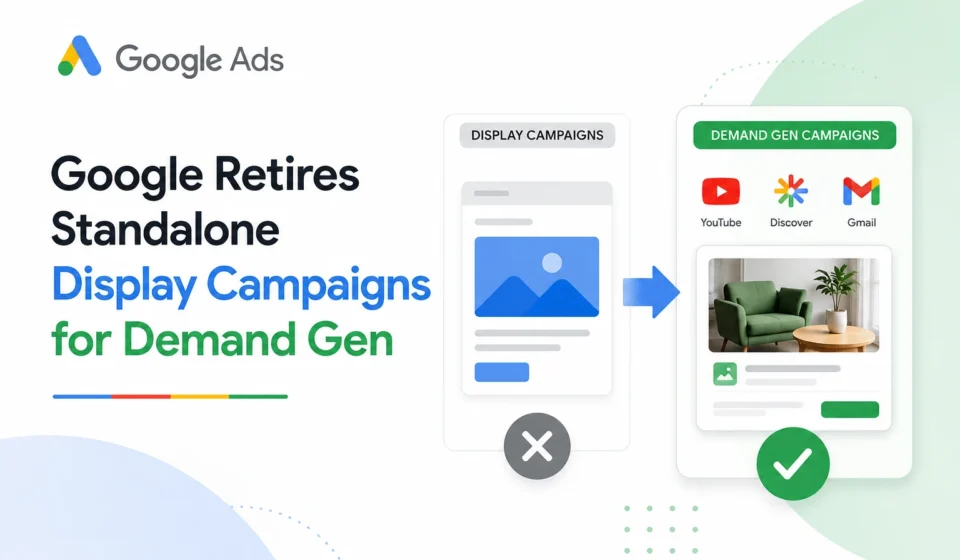

Google Ads is reportedly retiring standalone Display campaigns as the company shifts its advertising strategy toward Demand Gen campaigns.
The move reflects Google’s growing focus on:
- AI-powered advertising
- visual discovery experiences
- automated campaign optimization
- multi-platform ad delivery
The change could significantly impact advertisers, agencies, and digital marketers who rely heavily on traditional Display advertising.
What Are Demand Gen Campaigns?
Demand Gen campaigns are Google’s AI-driven advertising format designed to help businesses reach users across:
- YouTube
- Discover
- Gmail
- visual Google surfaces
Unlike traditional Display campaigns, Demand Gen focuses more on:
- visual storytelling
- audience engagement
- AI-powered targeting
- conversion optimization
The format is intended to create more immersive and discovery-focused advertising experiences.
Why Google Is Retiring Standalone Display Campaigns
Google has been steadily moving toward:
- automation
- AI-based optimization
- machine learning-driven advertising systems
The retirement of standalone Display campaigns signals a broader strategy shift away from manual campaign management and toward AI-assisted advertising workflows.
Google increasingly wants advertisers to rely on:
- automated targeting
- predictive optimization
- AI-generated audience insights
AI Is Becoming Central to Google Ads
Artificial intelligence is now deeply integrated into Google’s advertising ecosystem.
AI systems are increasingly used for:
- ad targeting
- bidding optimization
- audience prediction
- creative recommendations
- campaign performance analysis
Demand Gen campaigns are part of Google’s larger effort to create more automated advertising experiences.
What This Means for Advertisers
Advertisers may need to adapt their strategies as Google phases out standalone Display campaigns.
Businesses may increasingly need to focus on:
- visual creative quality
- audience engagement
- AI-compatible campaign structures
- cross-platform advertising experiences
Marketers who rely heavily on manual Display campaign control may see major workflow changes.
The Shift Toward Visual Discovery Advertising
Modern users increasingly discover products and services through:
- video content
- recommendation feeds
- visual browsing
- AI-generated suggestions
Google appears focused on aligning its advertising products with these evolving user behaviors.
Demand Gen campaigns are designed to better match modern content consumption patterns.
How Demand Gen Differs From Traditional Display Ads
Traditional Display campaigns mainly focused on:
- banner ads
- website placements
- broad display networks
Demand Gen campaigns place greater emphasis on:
- visual experiences
- personalized recommendations
- AI-driven audience matching
- integrated platform engagement
This represents a major evolution in digital advertising strategy.
Concerns Around Increased Automation
Some advertisers remain concerned about growing reliance on AI automation.
Critics argue that increased automation may:
- reduce campaign transparency
- limit manual control
- make optimization harder to understand
- increase dependence on Google’s AI systems
As AI-driven advertising expands, balancing automation and advertiser control remains a major discussion topic.
Google’s Bigger AI Advertising Strategy
The Demand Gen transition is part of Google’s wider AI transformation across:
- Search
- Shopping
- Ads
- YouTube
- AI-powered discovery experiences
Google is rapidly redesigning digital advertising around machine learning and intelligent automation.
The Future of AI-Driven Advertising
Future advertising systems may become increasingly:
- automated
- predictive
- personalized
- visually immersive
AI may eventually handle:
- audience discovery
- campaign optimization
- content personalization
- performance adjustments
with minimal manual input from advertisers.
Conclusion
Google retiring standalone Display campaigns in favor of Demand Gen highlights the company’s accelerating shift toward AI-driven advertising and visual discovery experiences. As digital advertising becomes more automated and platform-integrated, marketers may need to rethink how campaigns are structured and optimized.
The change also signals a future where artificial intelligence plays an even larger role in how businesses connect with audiences online.