

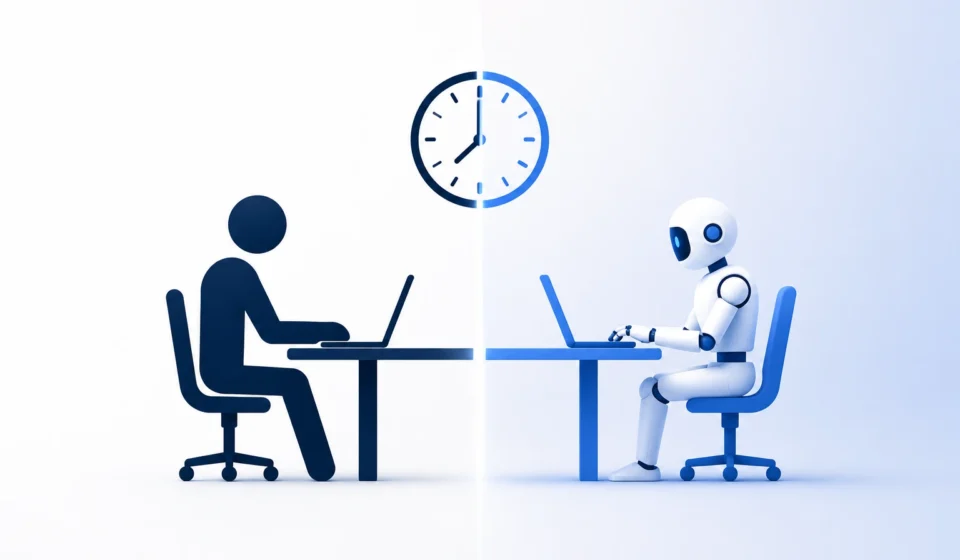

Mustafa Suleyman, CEO of Microsoft AI, has warned that artificial intelligence could soon perform many office tasks at near human-level capability within the next 12 to 18 months.
The statement has sparked major discussions around:
- AI automation
- workplace disruption
- the future of office jobs
- white-collar employment risks
Suleyman reportedly identified professions such as:
- law
- accounting
- marketing
- project management
as especially vulnerable to rapid AI-driven transformation.
What Did Mustafa Suleyman Say?
According to reports, Suleyman believes AI systems are advancing much faster than many people expected.
He warned that AI may soon become capable of handling:
- research tasks
- administrative work
- content creation
- data analysis
- planning and coordination
at performance levels similar to human office workers.
The timeline he suggested — roughly 12 to 18 months — has intensified concerns about how quickly workplaces could change.
Which Jobs Could Be Most Affected?
The warning focused mainly on knowledge-based office roles.
Some of the most vulnerable areas may include:
- Legal document review
- Accounting and financial analysis
- Marketing content and campaign planning
- Project coordination
- Administrative operations
AI systems are increasingly capable of handling repetitive digital tasks, especially those involving:
- text processing
- reporting
- analysis
- workflow management
Why AI Is Improving So Quickly
Recent advances in generative AI have dramatically increased what AI systems can do.
Modern AI tools are now capable of:
- Writing reports
- Summarizing large documents
- Creating presentations
- Managing workflows
- Answering complex questions
As AI models continue improving, many companies are exploring how automation could reduce operational costs and improve efficiency.
Why This Raises Concern About Office Jobs
Unlike previous waves of automation that mostly affected manual labor, AI is now beginning to impact white-collar professions.
This has raised concerns because millions of workers globally rely on office-based knowledge jobs.
Critics worry that rapid AI adoption could lead to:
- Job displacement
- Smaller teams
- Reduced entry-level opportunities
- Increased pressure on workers to adapt quickly
AI Is Already Changing the Workplace
Many companies are already integrating AI into daily operations.
Businesses are increasingly using AI for:
- Customer support
- Data analysis
- Marketing automation
- Internal productivity tools
- Software development
The shift toward AI-assisted work is happening across industries worldwide.
Could AI Fully Replace Humans?
While AI systems are becoming more capable, many experts believe complete replacement of human workers is unlikely in the near future.
Human strengths such as:
- creativity
- emotional intelligence
- strategic thinking
- leadership
- ethical judgment
still remain difficult for AI to replicate fully.
Instead, many workplaces may move toward:
human-AI collaboration models.
New Opportunities May Also Emerge
Although automation creates uncertainty, AI may also generate new types of jobs and industries.
Growing demand is already appearing for:
- AI specialists
- prompt engineers
- AI workflow managers
- cybersecurity professionals
- AI ethics experts
Historically, technological revolutions have often replaced some jobs while creating entirely new ones.
The Importance of Upskilling
Experts increasingly recommend that workers focus on:
- AI literacy
- digital skills
- adaptability
- problem-solving abilities
Learning how to work alongside AI may become essential across many professions in the coming years.
What the Future of Office Work Could Look Like
If AI reaches near-human performance for many office tasks, workplaces may become significantly more automated.
Future office environments could rely heavily on:
- AI assistants
- workflow automation
- intelligent digital agents
- AI-powered decision systems
This may fundamentally reshape how businesses operate.
Conclusion
Mustafa Suleyman’s warning highlights how rapidly artificial intelligence is advancing and how significantly it could impact professional office work in the near future. As AI systems continue improving, industries such as law, accounting, marketing, and project management may experience major transformation.
While AI could automate many repetitive tasks, the future may ultimately depend on how humans adapt, collaborate with AI, and develop new skills in an increasingly automated world.