
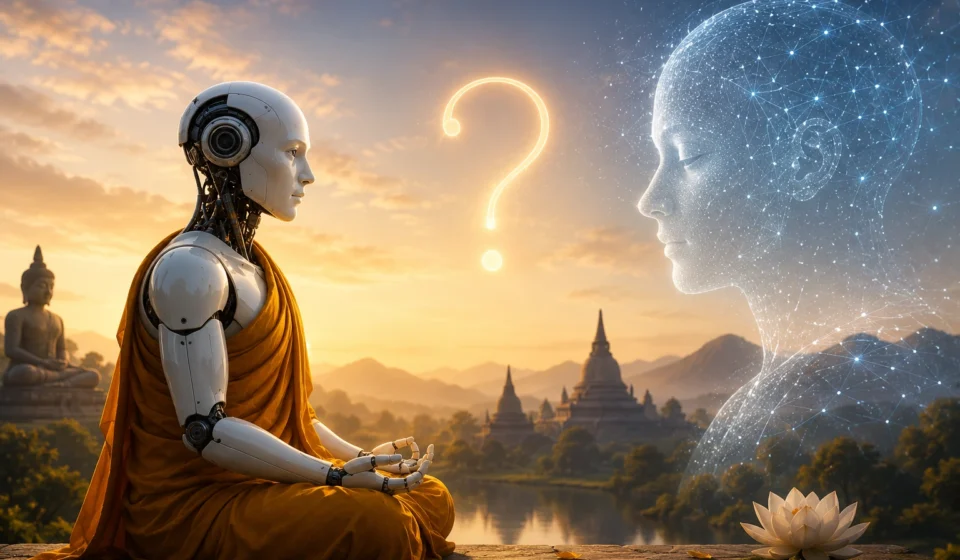

A humanoid robot named Gabi is drawing global attention after reportedly being ordained as a lay Buddhist follower in South Korea.
The unusual event has sparked intense conversations online about:
- Artificial intelligence and spirituality
- The future of robots in human society
- Whether AI can truly understand religion
As humanoid robots become more advanced, stories like this are forcing people to rethink the relationship between technology and humanity.
But can AI actually be spiritual?
Who Is Robot Gabi?
Gabi is a humanoid robot designed to interact with humans using AI-powered communication and social behavior.
According to reports, Gabi recently participated in a Buddhist ordination ceremony and formally took vows as a lay Buddhist follower.
The event quickly went viral because it blended:
- Robotics
- Religion
- Artificial intelligence
- Human culture
in a way rarely seen before.
Why the Story Is So Unusual
Religion has traditionally been considered deeply human.
Spirituality is often connected to:
- Emotions
- Consciousness
- Belief systems
- Personal experiences
A robot participating in a religious ceremony raises major philosophical questions about whether machines can ever truly engage with spiritual practices.
Can AI Actually Understand Spirituality?
This is where the debate becomes more complicated.
Modern AI systems can:
- Process language
- Recognize emotions
- Hold conversations
- Simulate human interaction
However, critics argue that AI does not possess:
- Consciousness
- Self-awareness
- Genuine belief
AI can imitate spiritual discussions, but whether it can truly experience spirituality remains unknown.
Why People Are Fascinated by AI and Religion
The story of Robot Gabi reflects a growing interest in how AI may influence:
- Religion
- Ethics
- Philosophy
- Human identity
As humanoid robots become more realistic, people naturally begin asking:
- Can machines develop moral understanding?
- Should robots participate in religious communities?
- Could AI someday guide spiritual conversations?
These questions are becoming more relevant as AI technology advances.
Concerns Around AI in Religious Spaces
Not everyone is comfortable with the idea of robots participating in spiritual traditions.
Some concerns include:
- Reducing religion to performance or simulation
- Misunderstanding sacred traditions
- Ethical boundaries between humans and machines
Critics argue that spirituality requires genuine consciousness, something AI currently lacks.
Supporters See It Differently
Others believe Robot Gabi’s ordination represents:
- Technological progress
- Human curiosity
- New ways of exploring spirituality
Some supporters argue that robots may eventually help:
- Teach religious knowledge
- Assist elderly communities
- Support meditation and mindfulness practices
In this view, AI could become a tool that helps humans engage more deeply with spiritual traditions.
The Bigger Question About AI and Humanity
Robot Gabi’s story is not only about Buddhism.
It reflects a much larger global discussion:
As AI becomes more human-like, where should society draw the line?
Humanoid robots are already being developed for:
- Customer service
- Healthcare
- Education
- Companionship
The idea of AI entering religious and spiritual spaces may become more common in the future.
Could AI and Religion Intersect More in the Future?
As artificial intelligence evolves, experts believe AI may increasingly interact with:
- Philosophy
- Ethics
- Religion
- Human emotional experiences
While AI may never truly “believe” in the human sense, it could still influence how people practice and discuss spirituality.
Conclusion
Robot Gabi’s Buddhist ordination has sparked a fascinating global conversation about the relationship between AI and spirituality. While artificial intelligence can simulate conversations and participate in ceremonies, many people still question whether machines can truly understand belief, consciousness, or spiritual meaning.
As AI technology continues advancing, stories like this may become more common and force society to rethink what it means to be human in the age of intelligent machines.