

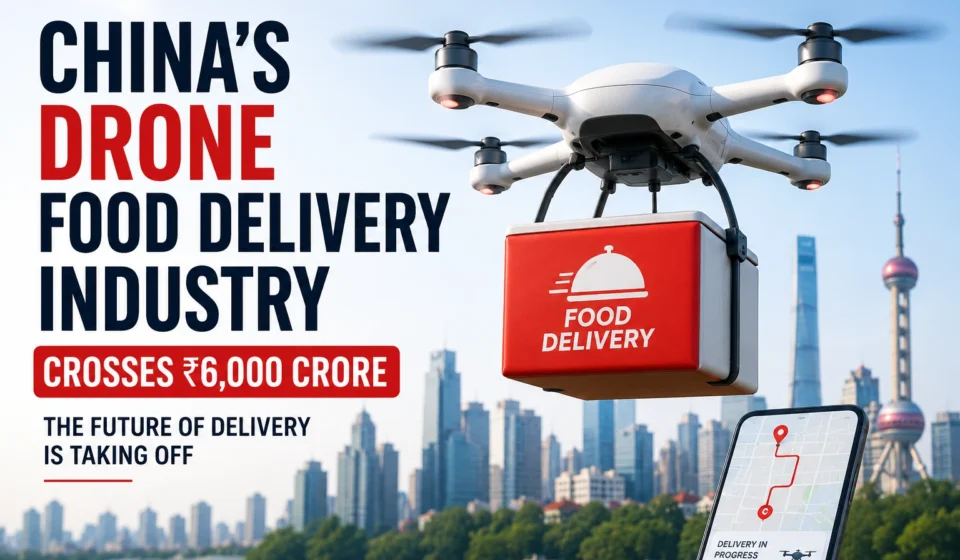

China’s drone food delivery industry is growing rapidly as autonomous aerial delivery systems become increasingly common across major cities.
According to reports, the industry has now crossed:
₹6,000 crore in market value, highlighting how drone-powered logistics are moving from experimental technology to real-world commercial infrastructure.
The development marks a major step forward in:
- autonomous delivery
- smart logistics
- urban mobility
- AI-powered commerce
- future transportation systems
China is quickly becoming one of the global leaders in drone-based delivery technology.
How Drone Food Delivery Works
Drone food delivery systems use autonomous aerial drones to transport food orders directly to customers.
These drones are typically equipped with:
- GPS navigation
- obstacle detection systems
- AI-powered route optimization
- automated flight controls
The technology allows food deliveries to bypass traffic congestion and potentially reduce delivery times significantly.
Why China Is Leading Drone Delivery
China has aggressively invested in:
- smart city infrastructure
- autonomous technology
- AI logistics systems
- urban mobility innovation
Major Chinese companies are rapidly expanding drone delivery services across:
- urban districts
- business centers
- residential zones
- university campuses
Supportive regulations and large-scale testing environments have also accelerated adoption.
The Industry Has Crossed ₹6,000 Crore
The reported ₹6,000 crore milestone highlights the growing commercial success of drone-powered delivery systems.
The market growth reflects increasing demand for:
- faster deliveries
- contactless logistics
- automated services
- efficient urban transportation
The expansion suggests drone delivery is becoming a serious part of future commerce infrastructure rather than just a technology experiment.
AI Plays a Major Role
Artificial intelligence is central to modern drone delivery systems.
AI helps drones:
- avoid obstacles
- optimize flight paths
- monitor weather conditions
- improve delivery efficiency
- coordinate large drone fleets
As AI systems improve, drone logistics networks may become even more autonomous and scalable.
How Drone Delivery Could Change Cities
Drone delivery systems may eventually transform how cities manage:
- food delivery
- eCommerce logistics
- medical transportation
- package distribution
Potential benefits include:
- reduced traffic congestion
- faster urban delivery
- lower delivery costs
- improved efficiency
Future smart cities may increasingly rely on aerial logistics networks.
Food Delivery Is Becoming More Automated
The rise of drone delivery reflects a larger trend toward automation in commerce.
Companies worldwide are investing in:
- delivery robots
- autonomous vehicles
- AI logistics systems
- smart warehouses
The goal is to make delivery networks:
- faster
- cheaper
- more scalable
- more efficient
Challenges Still Remain
Despite rapid growth, drone delivery still faces several challenges.
These include:
- aviation regulations
- safety concerns
- weather limitations
- battery life constraints
- privacy issues
- urban air traffic management
Large-scale global adoption may still require years of infrastructure and policy development.
Global Competition in Autonomous Delivery
China is not alone in exploring drone delivery.
Companies and governments in:
- United States
- South Korea
- Japan
- Europe
- India
are also investing heavily in autonomous logistics technologies.
Competition in the future delivery economy is becoming increasingly intense.
Could Drone Delivery Become Normal?
Experts believe drone delivery could become far more common over the next decade.
Future systems may eventually support:
- instant urban deliveries
- AI-managed logistics networks
- autonomous retail fulfillment
- smart city transportation systems
What once seemed futuristic may gradually become a normal part of everyday life.
Conclusion
China’s drone food delivery industry crossing ₹6,000 crore highlights how autonomous logistics are rapidly moving into the mainstream. By combining drones, AI, and smart urban infrastructure, China is helping shape the future of delivery and transportation technology.
As automation and aerial logistics continue evolving, drone-powered delivery systems may become a major part of global commerce in the years ahead.