
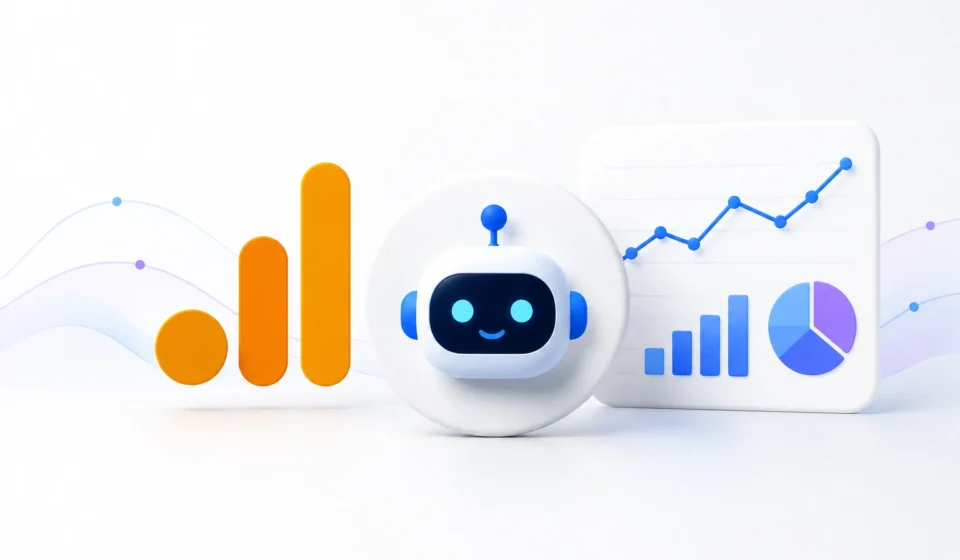

Google Analytics is becoming more AI-powered with the introduction of a new AI Assistant and updated AI traffic tracking features.
The update is designed to help marketers, businesses, and website owners better understand analytics data using artificial intelligence.
As of May 2026, Google is increasingly integrating AI across its products, and Google Analytics is now evolving from a traditional reporting platform into a more intelligent data assistant.
What Is the New AI Assistant in Google Analytics?
The new AI Assistant helps users interact with analytics data using natural language.
Instead of manually searching through reports, users can potentially:
- Ask questions directly
- Receive automated insights
- Understand traffic changes faster
- Get simplified explanations of data trends
The goal is to make analytics easier for both beginners and experienced marketers.
How the AI Assistant Could Help Marketers
Analytics platforms often contain large amounts of complex data.
The AI Assistant may help simplify tasks such as:
- Understanding traffic spikes
- Identifying performance trends
- Explaining user behavior changes
- Detecting anomalies in reports
This could reduce the amount of manual analysis required in daily marketing workflows.
Google Is Also Adding New AI Traffic Tracking Features
Alongside the AI Assistant, Google Analytics is reportedly adding new AI-related traffic classifications and channel tracking updates.
This includes changes to:
- Default Channel Groups
- AI-related traffic categorization
- Attribution tracking for AI-driven user interactions
The update reflects the growing importance of AI platforms and conversational interfaces in online discovery.
Why AI Traffic Tracking Matters
More users are now discovering websites through:
- AI assistants
- Conversational search tools
- AI-generated recommendations
Traditional analytics systems were not originally designed to track these new traffic behaviors clearly.
Google’s new tracking features may help marketers better understand:
- Where AI-driven traffic comes from
- How users interact through AI platforms
- Which AI channels drive engagement
AI Is Changing Digital Analytics
The addition of AI tools inside Google Analytics reflects a broader industry trend.
Analytics platforms are increasingly moving toward:
- Automated insights
- Predictive reporting
- Conversational interfaces
- AI-generated recommendations
Instead of manually interpreting charts and reports, users may increasingly rely on AI-generated explanations and summaries.
Potential Benefits for Businesses
Businesses using the new AI-powered features may benefit from:
- Faster reporting analysis
- Easier decision-making
- Improved marketing insights
- Reduced technical complexity
Smaller businesses and beginners may especially benefit from simplified analytics workflows.
Concerns Around AI-Generated Analytics
While AI assistants can improve efficiency, some concerns remain.
Critics point to risks such as:
- Incorrect interpretations
- Overreliance on automation
- Reduced manual analysis skills
- AI-generated reporting inaccuracies
Human review may still remain important for strategic decisions and advanced analytics interpretation.
The Future of AI-Powered Analytics
Google’s latest update suggests analytics platforms are becoming more intelligent and automated.
Future AI-powered analytics systems may eventually:
- Predict traffic trends automatically
- Recommend marketing strategies
- Generate campaign insights instantly
- Provide real-time optimization suggestions
This could fundamentally reshape how businesses analyze and use data online.
Conclusion
Google Analytics adding an AI Assistant and new AI traffic tracking features marks another major step toward AI-powered marketing tools. By simplifying analytics and improving AI-driven traffic analysis, Google is helping businesses adapt to the changing digital landscape.
As AI continues transforming online behavior, analytics platforms are likely to become increasingly conversational, automated, and intelligent.