
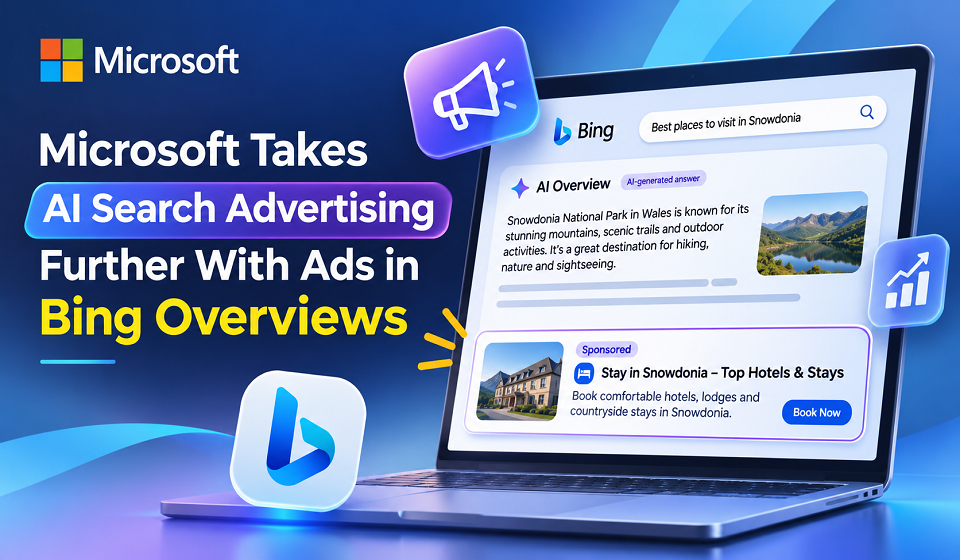

Microsoft is expanding its advertising ecosystem into AI-powered search experiences by introducing advertisements alongside AI Overviews in Bing Search. The update allows businesses to reach users while they interact with AI-generated answers, creating another opportunity for advertisers to appear during the search and decision-making process.
The move reflects the growing shift from traditional search results toward AI-assisted discovery, where users increasingly rely on generated summaries to research products, services and information. Microsoft says advertisers can access these placements through existing campaigns, without creating separate advertising campaigns specifically for AI Overviews.
Here’s what the new Bing AI advertising update means for advertisers, businesses and the future of digital marketing.
Microsoft Introduces Ads Alongside Bing AI Overviews
Microsoft Advertising is now allowing relevant advertisements to appear alongside AI-generated answers in Bing AI Overviews.
AI Overviews summarise information from different sources to help users understand a topic more quickly. Instead of relying only on a list of traditional search links, users can receive an AI-generated response that provides context, suggestions and information related to their query.
With the new advertising integration, businesses can potentially appear beside these AI-generated responses when their products or services are relevant to the user’s search.
The feature builds on Microsoft’s existing advertising integrations within Copilot and expands the company’s efforts to monetise AI-powered search experiences.
How Ads in Bing AI Overviews Work
The new advertising placement is designed to connect advertisements with the context of an AI-generated answer.
For example, a user searching for travel information about Snowdonia National Park may receive an AI Overview containing travel tips, a suggested itinerary and information about nearby attractions.
If the user is exploring accommodation options, a relevant hotel advertisement could appear alongside the AI-generated response.
This approach allows advertisers to potentially reach users while they are researching a topic, exploring options or considering what to do next.
Rather than relying exclusively on traditional search keywords, advertising placements can become connected to the broader context of a user’s search and AI-generated answer.
No Separate Campaign Setup Required
One of the most important details of Microsoft’s announcement is that advertisers do not need to create separate campaigns specifically for Bing AI Overviews.
The new placements work through existing Microsoft Advertising campaigns, allowing eligible advertisements to appear within AI-powered experiences.
Microsoft highlights the following campaign types:
- Performance Max: Automated campaigns designed to reach audiences across Microsoft’s advertising ecosystem.
- AI Max: AI-powered campaign capabilities that help advertisers expand targeting, improve creative relevance and reach users across search experiences.
According to Microsoft, these campaign types can help advertisers reach people across AI-powered experiences without requiring an entirely separate campaign structure.
This could simplify adoption for businesses already using Microsoft Advertising.
Bing AI Overview Ads Are Available Globally
Microsoft says ads in Bing AI Overviews are now available in all markets except China.
This broad availability could give advertisers across multiple countries an opportunity to reach users through AI-generated search experiences.
However, actual ad visibility may depend on campaign eligibility, relevance, market availability and Microsoft’s advertising systems.
The announcement does not provide detailed information about dedicated placement controls, reporting features or performance benchmarks specifically for AI Overview advertisements.
Advertisers should therefore monitor their campaign performance and available reporting data rather than assuming the new placement will automatically deliver improved results.
Microsoft Reports a 21% Increase in Purchases After Copilot Interactions
Microsoft has highlighted data suggesting that AI-assisted interactions can influence purchasing behaviour.
According to Microsoft, its data shows a 21% increase in purchases following a Copilot interaction.
The figure highlights the potential commercial value of AI-powered experiences, particularly when users move from researching products or services to making purchasing decisions.
However, this statistic should be interpreted carefully.
It relates to purchases following Copilot interactions and does not establish that advertisements appearing in Bing AI Overviews will produce the same increase in conversions.
Microsoft has not shared specific performance benchmarks demonstrating how the new Bing AI Overview ad placement affects clicks, conversions, revenue or return on advertising spend.
Why Microsoft Is Expanding Advertising Into AI Search
Search behaviour is evolving as AI tools change how people discover information.
Traditional search engines typically present users with links, advertisements and website listings. AI-powered search experiences can instead provide summaries, explanations, recommendations and contextual answers.
This creates new opportunities for advertisers to appear during different stages of a user’s decision-making journey.
A person researching a destination, comparing services or exploring product options may interact with an AI-generated answer before performing a traditional commercial search.
Microsoft’s new placement aims to bring advertisements into these AI-driven moments.
For businesses, this could mean additional opportunities to connect with users while they are actively exploring relevant topics.
What This Means for Digital Marketers and Advertisers
The introduction of ads in Bing AI Overviews could influence how advertisers approach Microsoft Advertising campaigns.
1. More Advertising Opportunities in AI Search
Advertisers may gain additional visibility within AI-generated responses, extending their reach beyond traditional search-result advertising placements.
2. Contextual Relevance Becomes More Important
Ads appearing alongside AI-generated answers need to be relevant to the user’s query and the information being presented.
Businesses with products or services that directly address users’ research needs could potentially benefit from these contextual placements.
3. Existing Campaigns May Reach New Users
Because the placement works through existing campaigns, advertisers may be able to reach users in AI search environments without creating separate campaigns.
4. Campaign Performance Needs Monitoring
The availability of a new placement does not guarantee improved performance.
Advertisers should evaluate available metrics, conversion quality, cost and overall campaign outcomes to determine whether AI-powered placements are contributing meaningful results.
Bing AI Advertising vs Traditional Search Ads
The difference between traditional search advertising and AI Overview advertising is primarily the environment in which users encounter the ads.
| Traditional Search Ads | Bing AI Overview Ads |
|---|---|
| Appear within traditional search-result layouts | Appear alongside AI-generated answers |
| Often connected closely to search keywords | Can be relevant to the broader AI-answer context |
| Users browse listings and links | Users interact with AI-generated summaries |
| Ads compete within traditional search placements | Ads gain opportunities within AI-powered search experiences |
The two formats are not necessarily competing with each other. Microsoft’s update expands the advertising ecosystem by introducing another potential placement where eligible campaigns can appear.
Will Bing AI Overview Ads Change the Future of Search Advertising?
The expansion reflects a wider industry trend toward monetising AI-powered search experiences.
As search engines introduce AI-generated answers, advertisers are looking for ways to maintain visibility when users may not interact with traditional search-result pages in the same way.
Microsoft’s approach allows advertising to become part of the AI-assisted discovery experience rather than remaining limited to conventional search listings.
The long-term impact will depend on how frequently users engage with AI Overviews, how relevant the advertisements are, and whether the placements deliver measurable results for advertisers.
Google, Microsoft and other technology companies are continuing to explore how AI search experiences can combine useful answers, commercial discovery and advertising.
What Advertisers Should Do Next
Businesses already running Microsoft Advertising campaigns should monitor their campaigns as AI-powered placements expand.
Advertisers may want to:
- Review existing Performance Max and AI Max campaigns.
- Ensure ad copy and landing pages match their products and services.
- Focus on relevance between search intent, advertising messages and landing-page content.
- Monitor available campaign performance metrics.
- Evaluate conversion quality rather than focusing only on impressions or clicks.
- Avoid assuming AI placements will automatically improve campaign results.
Because Microsoft has not provided detailed AI Overview-specific reporting or placement controls in this announcement, advertisers should rely on the reporting capabilities currently available within their accounts.
Final Thoughts
Microsoft’s introduction of ads alongside Bing AI Overviews marks another step in the evolution of AI-powered search advertising.
The update allows businesses to potentially reach users while they interact with AI-generated answers, expanding advertising opportunities beyond traditional search-result placements.
With no separate campaign setup required and availability across markets except China, the feature could make AI search advertising easier for existing Microsoft Advertising users to access.
However, the real impact will depend on advertiser performance, user behaviour, ad relevance and the reporting tools Microsoft provides in the future.
As AI continues to reshape search, advertising platforms are increasingly adapting their strategies to reach customers where they discover information, evaluate options and make decisions.